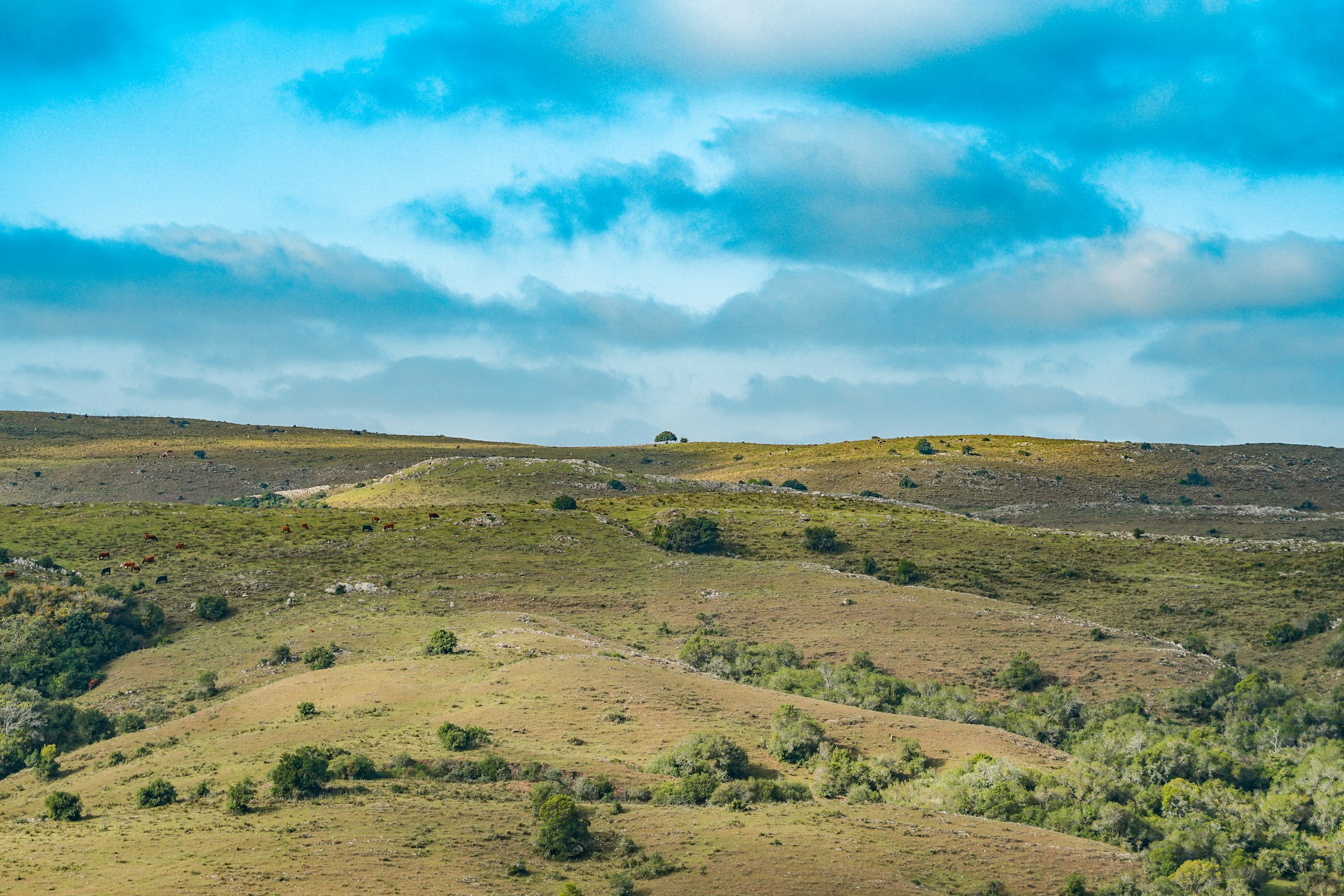
Buying land in Uruguay is open to foreigners on the same terms as citizens — whether a building plot by the sea or a rural estate.
Many international buyers prefer to build their own home rather than buy an existing one. Others look at rural land as a long-term investment. Here is how land purchases work, what to check and what to budget.
Table of Contents
Types of land you can buy
- Urban and suburban plots: lots in towns, coastal resorts and gated communities near Montevideo (Canelones) or Punta del Este.
- Plots in gated communities: popular for security and services; check building rules and common charges.
- Chacras: small rural estates of several hectares — see buying a chacra in Uruguay.
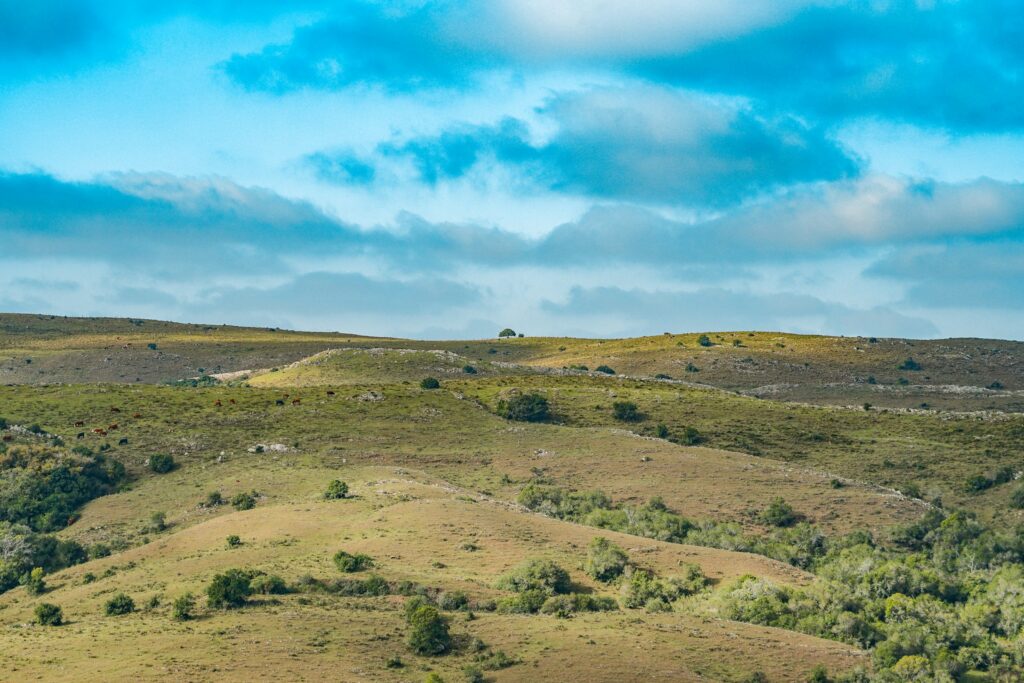
- Farmland (campos): larger rural holdings for agriculture, livestock or forestry.
Can foreigners buy land in Uruguay?
Yes. Uruguay does not limit land ownership by foreign individuals or companies. Rural land must, however, be held by individuals or by companies whose owners can be identified — under Law 18.092, companies holding rural land need nominative shares, according to Chequeado. Since 2014, Law 19.283 prohibits foreign states from buying rural land; private foreign buyers are unaffected.
What to check before you buy land
- Title and boundaries: your escribano checks the title; a surveyor confirms the plan and boundaries.
- Zoning: whether you can build, how much and how high — rules differ by department and area.
- Services: road access, electricity, water, sewage or septic system, internet.
- Coastal and environmental rules: extra restrictions apply near the coast, dunes and lagoons.
- Community rules: in gated communities, building codes and monthly fees.
Building your home
Building in Uruguay requires a local architect, municipal permits and a reliable builder. Construction costs vary widely with design and finishes, and Uruguay’s national statistics institute publishes a monthly construction cost index to track changes. Get several detailed quotes and allow time — from design to keys, a custom house often takes one to two years.
For a full walkthrough of costs, permits and timelines, read our guide to building a house in Uruguay.
Costs of buying land
Transaction costs are similar to buying a house — transfer tax, notary fees and agency commission, roughly 6–9% in total. Annual property taxes are generally moderate. See the buying process and costs.
Buying land in Uruguay: key takeaways
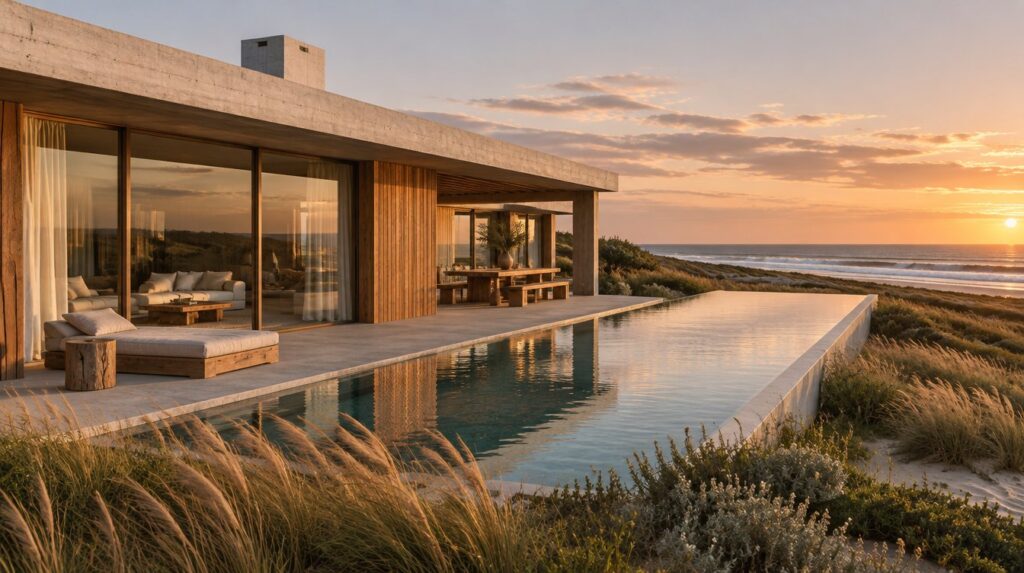
Buying land in Uruguay is straightforward for foreigners: no limits on private foreign ownership, transparent registries and dollar pricing. Check title, zoning, services and coastal rules before you buy, budget 6–9% in transaction costs, and plan design, permits and construction carefully if you intend to build. Rural land must be held by identifiable owners; only foreign states are excluded.
Frequently asked questions
Is land in Uruguay expensive?
Prices depend entirely on location: coastal plots near José Ignacio and Punta del Este are expensive; inland and rural land is far cheaper. See Uruguay property prices.
Do I need residency to buy land?
No — residency and land ownership are separate. Read moving to Uruguay for residency.
Related reading
- Building a house in Uruguay: costs, permits and plots
- Buying a chacra in Uruguay
- Uruguay real estate: the complete guide
- How to buy property in Uruguay as a foreigner
- Investing in Uruguay