
The most surprising facts about Uruguay come from its history of firsts: a small country that often legislated decades ahead of its neighbours.
A viral video recently listed Uruguay’s achievements, from the first World Cup to a laptop for every child. We checked each claim against official and academic sources. Here are 16 facts about Uruguay that hold up, a few that need correcting, and why they matter if you are thinking of moving or buying property there.
Table of Contents
Uruguay’s firsts at a glance
- 1877 — Free, compulsory and secular public schooling, after José Pedro Varela’s reform.
- 1892 — The first kindergarten in South America.
- 1907 — Death penalty abolished; divorce by mutual consent legalised.
- 1913 — Women may file for divorce on their sole will.
- 1915 — National eight-hour working day.
- 1916 — Winner of the first South American Championship, today’s Copa América.
- 1927 — The first vote cast by women in Latin America, in Cerro Chato.
- 1930 — Host and winner of the first FIFA World Cup.
- 1960 — One of the world’s first implanted pacemakers.
- 2009 — Every public primary pupil and teacher has a laptop (Plan Ceibal).
- 2011 — The first commercial 4G/LTE network in Latin America.
- 2013 — The first country to legalise and regulate the cannabis market.
- Today — 98% renewable electricity, the highest GDP per capita in Latin America and the region’s most peaceful country.
Education and social rights: 1877–1927
1877: free, compulsory and secular schools
Educator José Pedro Varela led the reform that made primary education free, compulsory and secular, captured in the 1877 Law of Common Education, according to his biography on Wikipedia. It shaped Uruguay’s public schools for a century and explains much of the country’s high literacy and its broad middle class.
1892: the first kindergarten in South America
Teacher Enriqueta Compte y Riqué founded the first kindergarten in South America in Montevideo in 1892, inspired by Froebel’s pedagogy.
1907: no death penalty, and divorce by mutual consent
Uruguay abolished capital punishment with Law 3238 of September 1907 and wrote the ban into its 1918 Constitution, according to the history of capital punishment in Uruguay. It was one of the earliest countries to do so; the first to abolish it for all crimes was Venezuela in 1863, as Guinness World Records notes. The same year, divorce by mutual consent became law, and in 1913 women gained the right to divorce on their sole will, legislation that researchers describe as early compared with the rest of Latin America.
1915: the eight-hour day
Law 5350 of November 1915 limited the working day to eight hours nationwide. Uruguay’s Ministry of Labour calls the country a pioneer in Latin America and the world. Claims that it was “the first in the world” are disputed, but it was among the first to legislate it nationally.
1927: the first women’s vote in Latin America
On 3 July 1927, women voted for the first time in Latin America in a local plebiscite in Cerro Chato, in the interior of Uruguay. The government commemorates it every year, and the town is home to the Museum of the First South American Women Citizens.
Football: two firsts the world remembers
Uruguay won the first South American Championship in 1916, the tournament now called the Copa América. In 1930 it hosted and won the first FIFA World Cup, played in Montevideo’s Estadio Centenario, which was built for the occasion. For a country of 3.5 million people, football remains part of national identity.
Medicine and technology: 1960–2013
1960: one of the world’s first pacemakers
On 3 February 1960, surgeon Roberto Rubio implanted a pacemaker developed with engineer Orestes Fiandra at the CASMU clinic in Montevideo, according to the IEEE Engineering and Technology History Wiki. It was one of the earliest implants anywhere, and Uruguay later developed its own pacemaker industry.
2007–2009: a laptop for every child
With Plan Ceibal, launched in 2007, Uruguay gave a laptop to every public primary pupil and teacher. By October 2009 the whole country was covered, which made it a world reference in digital education.
2011: Latin America’s first commercial 4G network
State operator Antel and Alcatel-Lucent launched what they presented as the first commercial 4G/LTE network in a Latin American country in December 2011, first in Montevideo and Punta del Este. Fast, reliable connectivity is one reason remote workers choose Uruguay today; see our article on Uruguay’s tech and free-zone ecosystem.
2013: the first regulated cannabis market
In December 2013 Uruguay became the first country in the modern era to legalise and regulate the production and sale of cannabis, under Law 19.172.
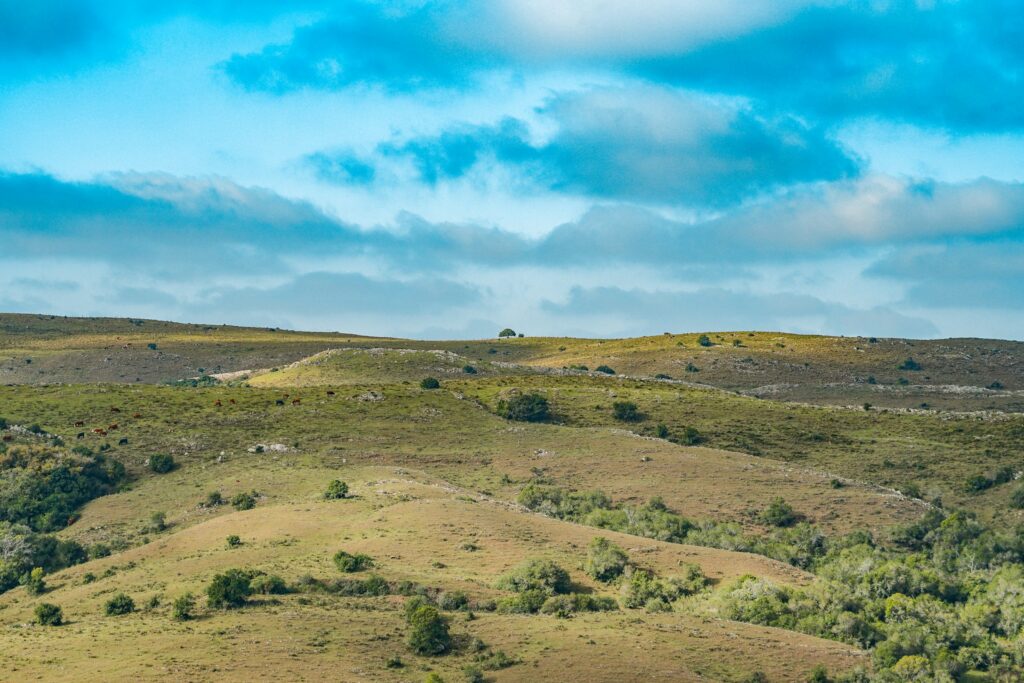
Facts about Uruguay today, in numbers
- No. 1 country to retire in the 2026 Global Retirement Index, with 99.9 points; see the best country to retire in 2026.
- 98% renewable electricity in 2025, mostly wind, hydro, biomass and solar, according to preliminary Ministry of Industry data.
- The highest GDP per capita in Latin America: about US$24,400 in 2025, ahead of Panama, according to IMF figures reported by The Rio Times.
- The most peaceful country in Latin America and the Caribbean in the 2026 Global Peace Index, 43rd of 163 countries, according to Uruguay XXI.
- Third in Latin America for human development, behind Chile and Argentina, in the 2025 UNDP Human Development Report.
Popular myths about Uruguay, checked
Viral videos about facts about Uruguay are mostly right, but a few claims go too far:
- “First country to abolish the death penalty”: no. Venezuela did it in 1863; Uruguay followed in 1907.
- “First in the world with the eight-hour day”: disputed. It was among the first to legislate it nationally, in 1915.
- “Second country in the world with secular education”: exaggerated. It was a regional pioneer.
- “The safest country in Latin America”: it tops peace rankings, but cities have crime like anywhere; read our honest guide to whether Uruguay is safe.
Why these facts about Uruguay matter if you are moving or buying
These facts about Uruguay are not trivia. It is the background to what international buyers value today: stable institutions, the rule of law, a broad middle class and policy that changes gradually. That is why it is often called Latin America’s most stable country.
In practical terms, it means property rights that apply equally to foreigners, a dollarised real estate market, clear residency rules and a quality of life that suits families and retirees. If you are weighing the decision, start with the pros and cons of living in Uruguay.
Frequently asked questions
What is Uruguay famous for?
Uruguay is known for winning the first FIFA World Cup in 1930, for early social reforms such as abolishing the death penalty in 1907 and the eight-hour day in 1915, for 98% renewable electricity and for being the first country to regulate the cannabis market.
What did Uruguay do first in the world?
It hosted and won the first FIFA World Cup (1930) and was the first country to legalise and regulate the cannabis market (2013). In Latin America it held the first women’s vote (1927) and launched the first commercial 4G network (2011).
Is Uruguay the richest country in Latin America?
By GDP per capita, yes: about US$24,400 in 2025 according to IMF figures, ahead of Panama. Prices are also high for the region.
Is Uruguay the safest country in Latin America?
It ranked as the most peaceful country in Latin America and the Caribbean in the 2026 Global Peace Index. Crime exists, especially petty theft in cities, so normal precautions apply.
How much of Uruguay’s electricity is renewable?
About 98% in 2025, from wind, hydro, biomass and solar, according to preliminary data from the Ministry of Industry, Energy and Mining.
Considering a move or a property in Uruguay? We can help you understand the country before you commit.
Related reading
- Why Uruguay is Latin America’s most stable country
- Is Uruguay safe?
- Investing in Uruguay
- The safest countries in South America
- Cost of living in Uruguay
Sources
- Wikipedia — José Pedro Varela
- Wikipedia — Enriqueta Compte y Riqué
- Wikipedia — Capital punishment in Uruguay
- Guinness World Records — First abolition of the death penalty
- Redalyc — Divorce legislation in Uruguay
- Ministry of Labour — 100 years of the eight-hour law
- Presidency of Uruguay — Cerro Chato, first women’s vote
- IEEE ETHW — Pacemakers in Uruguay
- Wikipedia — Ceibal project
- PR Newswire — Antel and Alcatel-Lucent launch 4G/LTE
- Wikipedia — Cannabis in Uruguay
- Noticias Ambientales — 98% renewable electricity in 2025
- The Rio Times — Uruguay leads Latin America in GDP per capita
- Uruguay XXI — Global Peace Index 2026
- Wikipedia — Latin American countries by HDI
- Wikipedia — 1916 South American Championship
- Wikipedia — 1930 FIFA World Cup