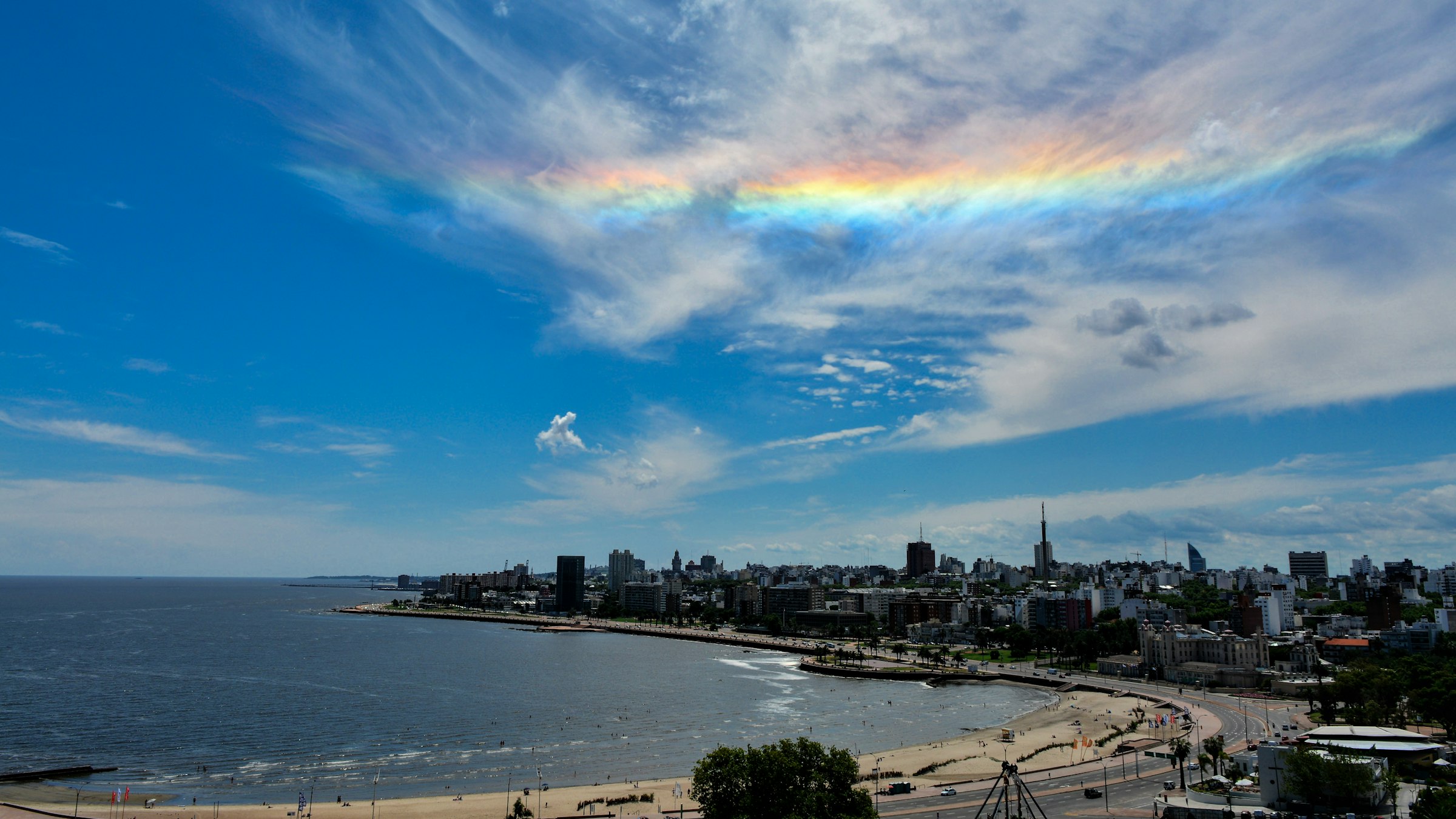
Uruguay rarely makes international headlines — and that is precisely the point. In a region known for economic swings and political drama, this small country of about 3.4 million people has spent decades quietly building something rare: institutions that work, rules that hold and a society that values moderation. For anyone buying a home abroad, that may be the most valuable amenity of all.
The most solid democracy in Latin America
The Economist Intelligence Unit’s Democracy Index has long placed Uruguay at the top of Latin America, and its 2024 edition classed it as the only “full democracy” in South America. Governments alternate between centre-left and centre-right coalitions, elections are clean and transitions are peaceful. Policy changes tend to be gradual and negotiated rather than abrupt.
The least corrupt country in Latin America
In Transparency International’s 2025 Corruption Perceptions Index, Uruguay scored 73 out of 100 and ranked 17th of 182 countries — the best result in Latin America and second in the entire Americas, just behind Canada. For property buyers, this matters in practical ways: clean land registries, predictable notarial processes and courts that enforce contracts.
Investment grade, with stable outlooks
Uruguay holds investment-grade ratings from all three major agencies: Moody’s Baa1 (affirmed in January 2026), S&P BBB+ and Fitch BBB, all with stable outlooks. It is one of very few Latin American countries in that position. The country carries one of the lowest sovereign risk premiums in the region, and its banking system is well capitalised.
A broad middle class and low inequality
According to the World Bank, Uruguay stands out in Latin America for its high per capita income and some of the lowest levels of poverty and inequality in the region, with more than 60% of the population in the middle class — the largest share in Latin America. That social cohesion is a large part of why the country feels calm and safe compared with its neighbours.
A leader in clean energy
Uruguay generated around 98% of its electricity from renewable sources in 2025, from a mix of hydro, wind, biomass and solar. It has been among the world leaders in wind and solar share for years — an achievement built on long-term planning rather than a single policy.
A long record of firsts
Uruguay’s reputation for doing things early is not new. Over the past century the country has repeatedly led the region — and sometimes the world:
- 1915: the eight-hour working day, the first such law in Latin America, part of the reforms of President José Batlle y Ordóñez that also separated church and state and allowed women to initiate divorce.
- 1927: in the town of Cerro Chato, women cast votes in a local plebiscite — widely remembered as the first time women voted in Latin America.
- 1930: Montevideo hosted the first FIFA World Cup, and Uruguay won it, beating Argentina 4–2 at the Estadio Centenario. The centenary match of the 2030 World Cup will return there.
- 1932: a law granting women full political rights, the first of its kind in Latin America.
- 2009: through Plan Ceibal, Uruguay became the first country in the world to give a laptop to every public primary school pupil, with free internet at school.
November 2026: a papal visit, calmly hosted
From 6 to 8 November 2026, Uruguay was the first stop of Pope Leo XIV’s first journey to South America — the first papal visit to the country since John Paul II in 1988. Masses in Paysandú and Florida and a prayer vigil for tens of thousands at Montevideo’s Estadio Centenario, the stadium of the first World Cup, were organised by one of the most secular societies in the Americas. It was a fitting snapshot of the country: open, tolerant and well organised, able to host a major international event with calm efficiency.
What this means for buyers
- Equal rights: foreigners can buy property on the same terms as citizens, with no residency requirement.
- Dollar pricing: residential property is usually priced and paid in US dollars.
- Predictability: stable institutions mean fewer surprises — in taxes, property rights and day-to-day life.
- Quality of life: safe, uncrowded beaches, a mild climate and a relaxed pace, two hours from a capital with international schools and hospitals.
Uruguay is not perfect — it is relatively expensive by regional standards, and the coast is quiet outside summer. But for buyers who value stability over spectacle, few places in the Americas compare.
Related reading
- Is Uruguay safe?
- Moving to Uruguay
- Cost of living in Uruguay vs the US
- Uruguay property prices in 2026
Sources
- Uruguay XXI — Economist Democracy Index
- Trading Economics — Transparency International CPI 2025
- Moody’s — Rating action on Uruguay, January 2026
- World Bank — Uruguay overview
- Noticias Ambientales — 98% renewable electricity in 2025
- FIFA Museum — Uruguay 1930, the first World Cup
- Wikipedia — 1927 Cerro Chato referendum
- Marca País Uruguay — Plan Ceibal
- Vatican News — Uruguay welcomes Pope Leo XIV
Leave a Reply